
Featured Story:
8 Questions Heading Into Sectionals ’22
by Norm Ramil, 8CA main person and dance team fan
1/20/22 8:15pm
It’s ALL you can think about right now: IHSA sectionals.
Depending on your team’s situation, your focus might be on how to fight your way into the qualifying field, or it may be more about curiosity (“who are we dancing against at state?”). Still other teams are just trying to cap off the season as strong as possible, knowing that a state trip is unlikely.
Whatever your specific scenario might be, here are 8 questions for everyone in the Illinois dance community to wonder about as we sail into sectionals weekend:
1: Which teams are fueled by recent momentum?
The normal approach to winter break is to take it really chill. But some dance teams used it as a golden opportunity to turn up their sharpness and tweak their choreography elements, and this led to visible gains on the competition floor in January, both in terms of on-floor impressions and actual points. Add in a good run at their conference competition, and some teams are in lit mode right now.
Will they take this momentum into sectionals and power through some stiff competition? Or have they already maxed out and squeezed every point out both their routine and themselves?
2: Which teams are healthy, and which teams are struggling with fatigue / injuries / illness?
Every winter around this time, the natural increase in sharpness and polish is often counterbalanced by increasing fatigue (physical and mental), and subtle injuries that bark a little bit louder than before. Coaches have to play the trade-off game where you have rest and battery-recharging on one hand, and sharpness-building repetition on the other hand.
Cold and flu season can harsh the flow, but COVID protocols can turn a team upside down. We see it right now in the NBA and NHL with team rosters wildly fluctuating to the point where you look at conference records and wonder how reliable the standings are for gauging teams against each other. Which dance teams can stay together? Or, if not together, which teams can navigate through having pieces of the team in and out?
Will one of the on-the-edge teams take advantage of their opponents’ chaos and nab a qualifying spot?
3: Which teams go for changes and which teams go for cleaning?
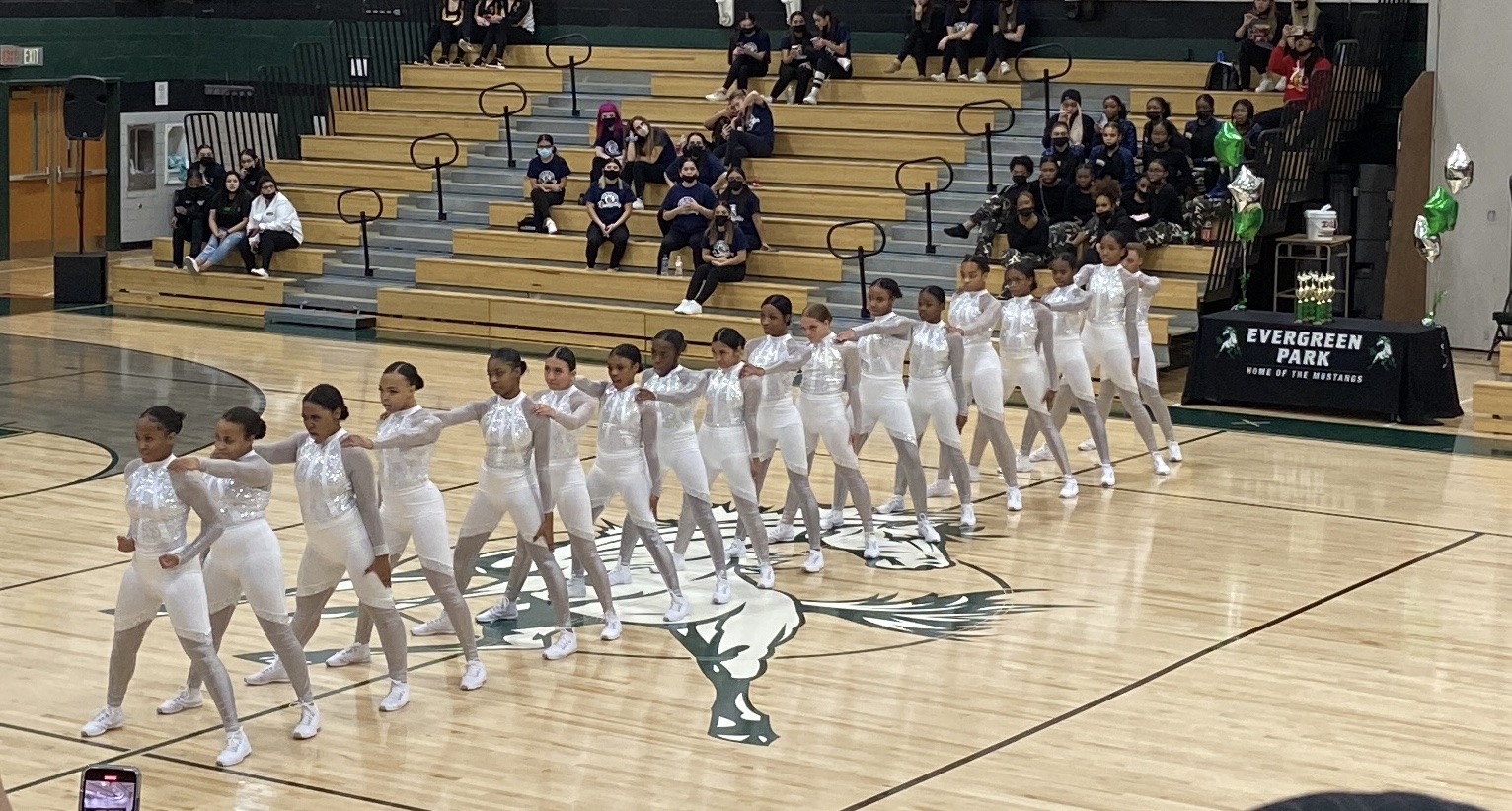
Every…single…winter…there’s that team that tries significant changes to their dance for sectionals. Maybe they’ve been brewing it since Christmas and haven’t brought it out yet. Maybe they came out of last weekend feeling the need to take a huge swing at something drastically different.
The other route is to assume that your dance still has more points available to earn, and it’s mostly a matter of fixing, cleaning, polishing, turning up both the performance aspect and synchronization.
It’s not that one way is right and the other’s wrong, but the cleaning / fixing route tends to lead to a better look on sectionals day.
For those who go for the big changes, here’s the problem: once you make them, you then have to clean them. Worth it? Possibly, especially if you feel that your dance has plateaued and the only way to increase the points haul is to add difficulty. Everyone will notice the changes. Whether or not they lead to a points AND a placement improvement is anyone’s guess.
4: Which teams come out of nowhere?
I don’t mean Cinderellas or dark horses, but literally those teams that don’t hit the comp floor very often. They’re a wild card in terms of your guesstimations. Sometimes you’re pretty sure of their qualifying status (“they’re automatically in” versus “their AD made them come to this”). Other times, you just don’t know. Maybe they lay low. Maybe they’re just selective about appearances, or even just plain busy with other stuff. Or they do one of the national circuits, or they’re focused on IDTA here in Illinois.
The most famous recent example: Maine East at the Huntley 2A sectional in 2017. If you weren’t into the 8CA Twitter feed that season, you would’ve missed the fact that they’re not just an IDTA team, but a really good one. And that particular winter, they brought a very talented team to the floor with super impactful choreography. Add in the element of surprise, and their 2A sectional title reaches legendary status.
5: Which teams bring which dances?
Ideally by January it’s clear which of your two dances is the obvious pick to bring to sectionals. I mean, you probably designed one to be the serious routine and the other one to be the fun or experience-building routine way back in June, right?
And then the numbers start creating a whole lot of unexpected uncertainty. The two dances start scoring similarly, or at least are a lot closer than they should be. Even worse, maybe the “B” dance starts to do better than the “A” routine. And then there’s the nightmare scenario of no pattern whatsoever–just randomness, like rolling dice every weekend. In any of those scenarios, you’re stuck with 2 dances to prep for every weekend in January…or you just pick one, not really sure it’s the way to go.
Maybe it’s kind of cool to keep the opponents guessing? Whatever the case, this is not the time to break out your secret tap – hip hop hybrid routine. Perhaps the “A” routine was always the A routine for a reason.
Or was it? Bahahahahaha (taps fingers together in an evil scientist sort of way)…
6: Which teams end up underperforming?
This one’s a bit different from the situation of a team maxing out, already achieving all they can with their dance (assuming they execute perfectly) (and assuming judges assess it consistently) (catch my drift on assumptions?). For #6, I’m talking more about those teams where you expect the dance to look a certain way and hit within a certain expected score range.
But then it doesn’t, for whatever reason.
Unlike last February’s recorded dances, anything can happen live. In fact it seems like this month we’ve seen more slips on aerial landings than we did in December. And more January dances than expected actually backed off on the synchronization. If a team is off, it’s still possible to score “not so hot” and still get in. Still, history says that there are at least a couple teams who seem like they’re trending toward going to state, but then they don’t quite cook the bacon all the way through.
7: Which teams overperform?
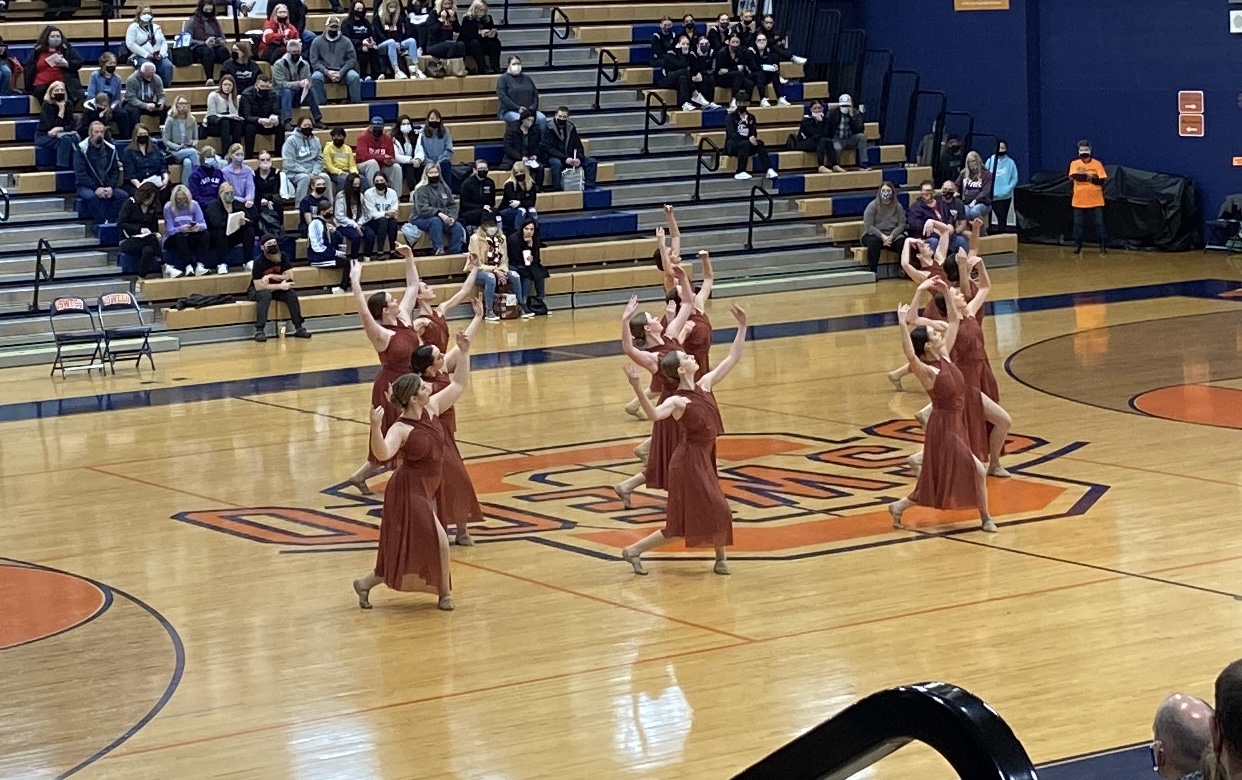
Many bubble teams are in a situation where everything would have to go right on Saturday for them to get into the state field. The old adage is true: you can only control your own performance. That’s your best shot at influencing the outcome (the rest of it is just how circumstances play out). For everything in your dance to go just right (assuming the judges score it in a way that matches your team’s max effort and max execution), the team would have to perform beyond the typical level. Even beyond, “ooh–that was a good run!” It would have to be, “That was our best of the winter by a MILE!”
At least one overperformer will probably get into the state field. Luck is involved, for sure. But a team can nudge fate in the right direction if they go far beyond the “average” version of themselves. Has there ever been a better moment to go big?
8: Which teams end up illustrating the system’s flaws?
In the moment, you’re dancing and competing. After all the scores are in, however, we have more than just a state field, and more than just a group of “they should’ve got ins.” We’ve got data — not just stats, but real kids and coaches who earned a score given by highly skilled judges. Whether or not that score translates to a state-qualifying placement is up to their opponents and the system, not the dancers who own that score.
It’s not just about hurt feelings. And there’s a deeper issue (equity). But for this point, I’m just talking about the raw mechanism of how IHSA assembles its state field. Most of us are pretty familiar with the story of those many teams since 2013 that danced well, scored great, and didn’t get in. We’ve all pondered the situations where the lower-scoring team goes to state and the higher-scoring team stays home.
It happens every single year. It’s really up to the whole dance community, IHSA included, to figure out if 10 seasons of these situations is enough to finally spark change.
Sectionals have the potential for both glory and ugliness, and these opposites are baked into the IHSA pie. You’re guaranteed to see an elated team hoisting a big sectional plaque, but you’re also promised the sight of tears that come from the other side of human hearts. Could be that it’s time to just opt for the cheesecake instead of the pie.
At least we can celebrate this truth: some of Saturday’s outcomes are in the hands (or rather, in the pom arms and beat-up jazz shoes) of the amazingly resilient, constantly beautiful talents of the Illinois dance community. Let’s go grab some points, dance for each other, and hit the dessert table.